

Introduction
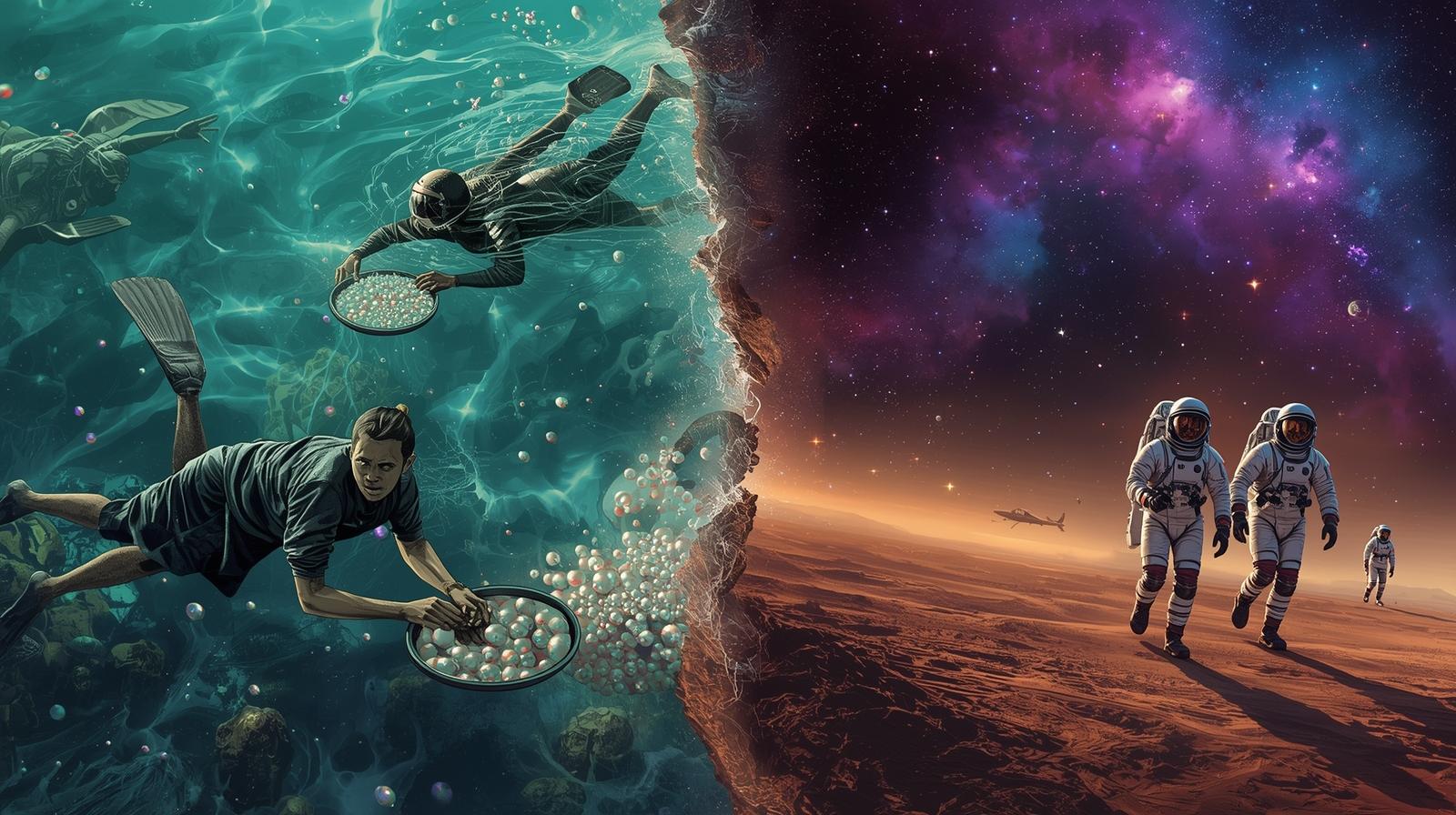
The story of the United Arab Emirates is one of the most dramatic narratives of cultural and economic transformation in human history. Within the span of a single lifetime, the nation has journeyed from an economy based on the precarious harvest of pearls from the seafloor to launching a probe to the orbit of Mars. This shift is not merely a change in occupation or technology; it represents a profound evolution in the Emirati psyche, worldview, and national identity. It is a journey from a culture defined by its immediate, physical environment to one that confidently operates on a global and interplanetary stage, all while striving to retain the core values that sustained its people for centuries.
The Pearl Diving Ethos: Resilience and Interdependence
The pearling industry, which dominated the region’s economy for millennia, forged a culture built on specific, survival-oriented values. Life was dictated by the rhythms of the sea and the harshness of the climate. This fostered an ethos of deep interdependence and communal solidarity. The success of a pearling voyage relied on the seamless cooperation of the Nakhuda (captain), the Al Ghaws (diver), and the Al Siyyib (puller). There was no room for individualism when lives and livelihoods depended on collective effort. This created a society that valued patience, trust, and resilience in the face of immense physical hardship and economic uncertainty. The cultural expressions of this era, such as the melancholic Fijiri work songs, reflect a worldview that was both stoic and deeply connected to the natural world.
The Oil Boom: The Dawn of a New Ambition
The discovery of oil in the 1950s and 60s did not just bring wealth; it introduced a new sense of possibility. The initial revenues were invested in the most fundamental aspects of nation-building: roads, schools, hospitals, and housing. This period marked the first major cultural pivot—from a focus on survival to a focus on development. Education, once a luxury, became a national priority for both boys and girls. With the formation of the UAE in 1971, a new, forward-looking national identity began to coalesce around the visionary leadership of Sheikh Zayed bin Sultan Al Nahyan. The values of the past were not discarded but repurposed; the communal solidarity of the pearling crew was channeled into a national project of building a modern welfare state.
The Bridge Generation: Navigating Two Worlds
A critical element of this cultural shift is the “bridge generation”—Emiratis who were born in the pre-oil era and came of age during the rapid modernization. This generation possesses a unique dual consciousness. They have firsthand memory of a life without electricity or running water, and they have actively participated in the creation of a 21st-century global hub. They serve as the vital cultural translators, ensuring that the wisdom, language, and traditions of the past are not lost on the digital-native youth. They embody the continuity of the culture, demonstrating that embracing the future does not require erasing the past, but rather building upon its foundational strengths.
The Mars Mission and the Knowledge-Based Economy
The UAE’s Hope Probe mission to Mars, which successfully entered orbit in 2021, is the ultimate symbol of this cultural evolution. It represents a strategic leap from a resource-based economy (pearls, then oil) to a knowledge-based economy. This shift required a fundamental change in educational focus, prioritizing STEM (Science, Technology, Engineering, and Mathematics) and fostering a culture of research, innovation, and calculated risk-taking—a stark contrast to the cyclical, predictable risks of the pearling season. The mission was not just a scientific endeavor but a powerful national project that unified the country around a new, ambitious identity: that of a contributor to human knowledge and a leading nation in the Arab world.
Conclusion: A Synthesis of Heritage and Futurism
The cultural shift from pearl diving to space exploration is not a story of replacement, but of synthesis. The resilience honed in the desert and on the sea is now applied to global diplomacy and economic diversification. The communal interdependence of the past is reflected in the strong social safety net and national solidarity of the present. The UAE has demonstrated that it is possible to launch a probe to Mars while still cherishing the scent of Bakhoor and the taste of Harees. The nation’s culture is now a unique blend, where the patience of the pearl diver informs the long-term vision of the space scientist, proving that the strongest foundations for the future are often built upon the wisdom of the past.